Orange County
- District 18
- District 18
- District 18
County Information
Chapel Hill Courthouse
Find out more information about the Chapel Hill Courthouse.
Contact Directory
Find out how to reach your Clerk of Court and other offices and representatives in Orange county.
Jury Service
Find information about jury service in this county.
Local Administrative Schedules
Find Orange County administrative schedules and calendars.
Local Rules and Forms
Find Local Rules and Forms that provide procedures and guidelines for courts in Orange County.
Orange County Courthouse
Find out more information about the Orange County Courthouse.
Orange County Historical Courthouse
Find out more information about the Orange County Historical Courthouse.
Payment Information
Find out more about paying court fees, fines and traffic citation in Orange County.
Civil Calendars
View civil court calendars.
Criminal Calendars
View criminal court calendars.
Guardian ad Litem Program
Find your local GAL program.
eCourts Services are Coming Soon -- April 29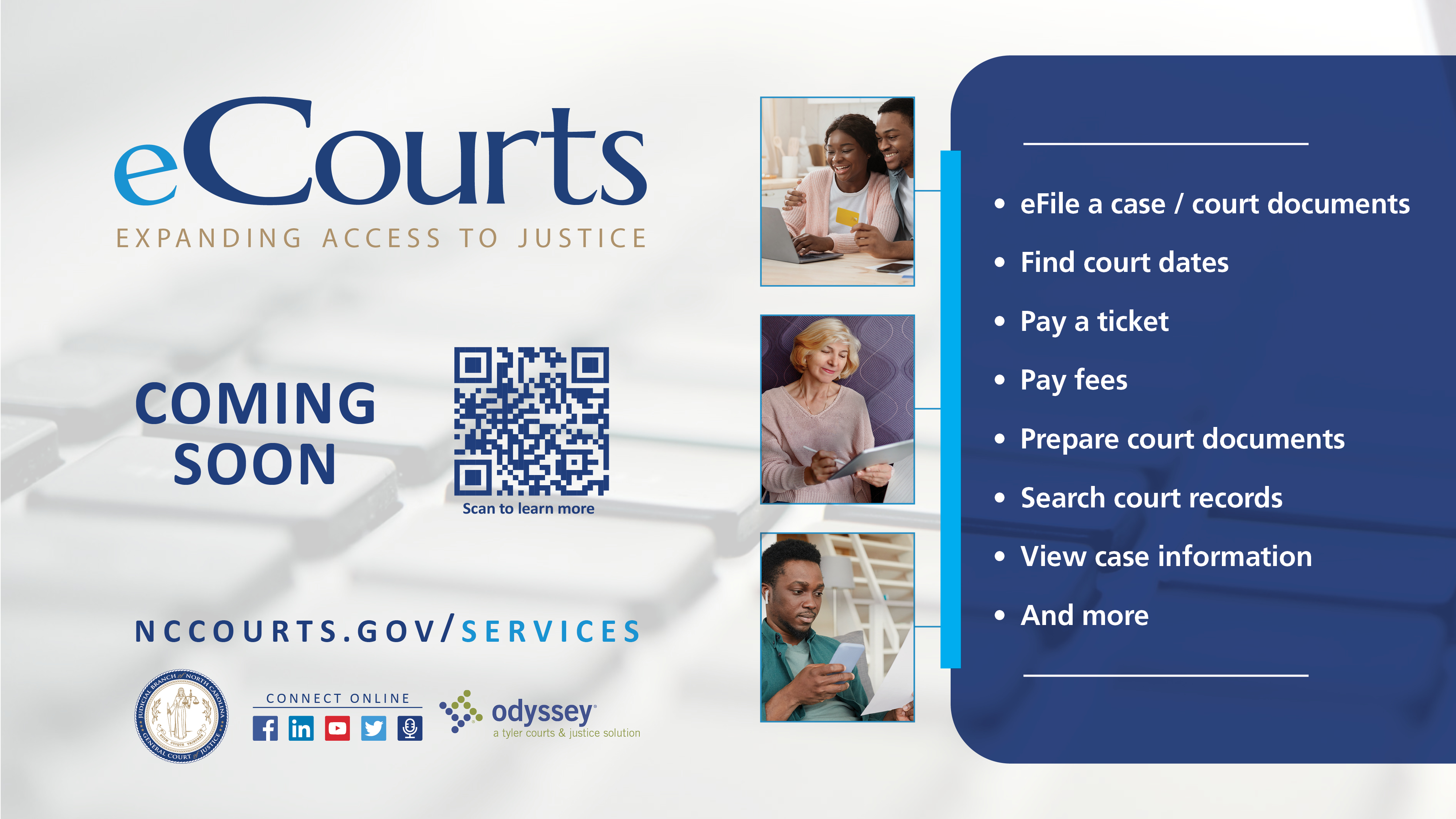
eFiling is required for attorneys filing in eCourts counties. Learn more, register for eCourts systems, and find training opportunities and materials about eCourts.
- eCourts Training Registration and Resources
- File & Serve (eFiling) and Portal Training Available for Attorneys and Judicial Partners Now Through August 2024
Online Services are UNAVAILABLE during the transition -- April 17 (5 p.m.) to April 29:
- Citation Services - payments, requesting reduction, compliance or dismissal
- Court Date Notifications
- Court Collections and Payments
- Civil eFiling - (Alamance, Durham, Forsyth, Guilford, Orange) starting April 24 at 7 p.m.
Court Dates
Search by name, citation number, county, and more.
Forms
Search statewide judicial forms by keyword, form number, and more.
Services
Online services for Guide & File, filing, and more.
Top stories

File & Serve (eFiling) and Portal Training Available for Attorneys and Judicial Partners Now Through August 2024

eCourts Track 4 Go-Live Timeline and Transition Process Starting April 17, 2024
REGISTER NOW: File & Serve (eFiling) and Portal Training Available for Attorneys and Judicial Partners in March and April 2024
More news from Orange County
Related
Programs
Vital Records
For birth, death, marriage, and other public records, please reach out to Orange County's Register of Deeds.